
Hii Lugha ilikuja na Meli! (This language came from overseas).
If you’ve lived in Kenya, you must have heard this phrase, or better yet, said it. It is an excuse we give whenever our English Airtime runs out.
Ranking highly on my checklist for my perfect woman (We’ll talk about the checklist some other day), is her understanding of the language. Forgive me, but a lady who cannot get her spellings right is a huge turn off for me.
Feminists, let’s not do the thing where you ask why it only applies to women. It just does.
Astonishingly, mastery of the English language is not directly proportional to one’s level of education. I have heard professors introduce themselves by saying, “My names are Prof. …”
So, what are some of the biggest Misses in English.
- My name is…
My name is Kennedy Kiiru Macharia. Those are three names. However, I said my name is, not my names are.
The Kenyan curriculum does not emphasize this enough but regardless of how many names you have, whenever you introduce yourself, never ever say it in plural.
If you are a victim of this, let’s give it a try. Type your name into the comments box and don’t you dare type the word ‘are’.

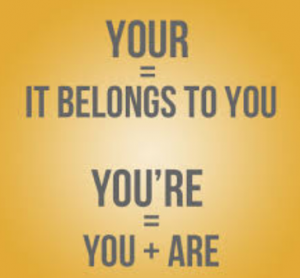
2. Your and You’re
“Your Cute” is one of the most common comments on Facebook Images. Technically, this means that the subject has something known as cute.
Your refers to possession.
You’re is a contraction for ‘You Are’.
Every time you seem confused, just remember, “You’re cute. Can I have Your number?”
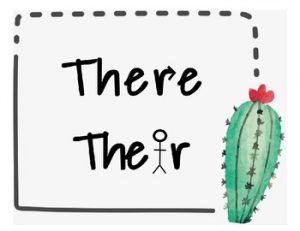
3. There and Their
There is location related.
Their is ownership related.
‘Their parents are over there. ‘
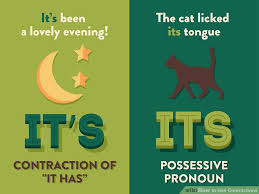
4. It’s and Its
Again, any word with an apostrophe is a contraction.
‘It’s’ is a contraction for ‘It is’.
Its refers to ownership.
Think it this way, ‘The car got its windshield broken. It’s at the garage being fixed.’
5. Am and I’m
This has to be the most mistaken pair of words in the English language.
There are controversies to this but I hope this settles it.
Am is a verb. A verb is an action, like, say eat, jump, dream.
Therefore, it is completely wrong to use a verb without a subject such as a noun.
Saying, “Am coming.” or “Am impressed” is more like saying “Eat Coming” or “Eat Impressed”.
Therefore, you need to precede the verb ‘am’ with a subject such as ‘I’.
“I am coming”. “I am impressed” makes sense grammatically.
I’m is a contraction of I am. It is used informally, mostly in spoken speech.
Therefore, you either say I am or I’m. There is no in between.
With the influx of the Chinese in Kenya, (Have you been to Kamukunji?) we may soon start speaking Chinese as a national language. In the meantime, let’s try and speak and spell our English right.


No Comments